
Groove Lite:Chat & Meet
Inside MobileSocial
4.61.17K Reviews
- Version
- 1.1.1
- Installs
- 100.00K
- Age Rating
- Mature 17+
Screenshots

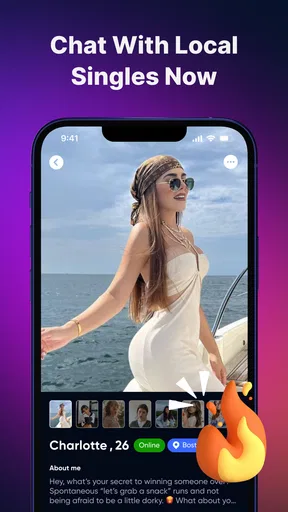



Our Review of Groove Lite:Chat & Meet
 Analysis by Appyee
I approached Groove Lite:Chat & Meet as a social app for moments when meeting new people nearby sounds more useful than scrolling through a broad, impersonal feed. Its basic idea is easy to understand: connect with real people in the surrounding area and begin a conversation. In practice, that makes it most interesting for users who want local interaction, but it also means that privacy, personal boundaries, and expectations matter more than they would in a general-purpose messaging app.
After spending time with it, my view is that Groove Lite:Chat & Meet works best as an optional way to discover nearby conversations, not as a replacement for the messaging tools you already use with friends, relatives, or colleagues. The app is free to install, comes from Inside Mobile, and sits in the social category. Its mature age classification is important: this is not an app I would casually place on a shared family tablet without first discussing who may use it and what kind of contact is appropriate.
How Groove Lite fits into a shared household
The most realistic household scenario is not everyone using one account together. It is one adult installing the app on a personal phone, while another person in the home occasionally borrows that device or sees notifications. That difference changes how I would recommend setting it up. A nearby-meeting app can expose names, messages, profile details, or conversation alerts at moments when another person is holding the phone, so the device itself needs a clear boundary.
For example, imagine someone returning home after work and checking local conversations while preparing dinner. A partner may need to borrow the phone briefly, or a child may ask to use it for something unrelated. That does not make the app unsafe by itself, but it does make casual sharing less comfortable than it might be with a weather or recipe app. I would keep the account tied to one clearly identified adult user and avoid treating it like a household account.
This is also where the app's local focus becomes a trade-off. Matching with people nearby can make conversations feel more relevant than contacts scattered across a large network, yet proximity can make personal details more sensitive. I would not include a home address, regular commute, school information, or a predictable daily schedule in a profile or early conversation. Keeping the first exchanges general gives me room to decide whether someone is trustworthy before revealing anything that could identify my routine.
That approach is especially useful on a shared device. Even if the app itself is used responsibly, a visible notification can reveal that a conversation is happening. I would review the phone's notification behavior before inviting anyone else to use the device, and I would sign out or switch users when appropriate rather than assuming the next person will respect an open session. These are simple habits, but they matter more for a location-oriented social app than for a standalone puzzle game.
One account should mean one person
I would not recommend passing one Groove Lite account between family members or roommates. A shared login blurs who is speaking, makes conversations harder to interpret, and can create awkward situations when one person sends a message that another person did not intend. It also weakens personal accountability. If two adults in the same home want to try the app, separate devices and separate accounts are the cleaner arrangement.
The same principle applies to a shared phone used by a teenager and an adult. The mature 17+ classification should be treated as a real boundary, not as a suggestion to ignore because the app is free. The right question is not simply whether the app can be installed. It is whether the intended user is within the stated age group and understands the risks of chatting with people nearby. For younger users, I would choose a service designed for their age group instead.
Groove Lite is running as version 1.1.1 and supports devices using Android 6.0 or later. That broad compatibility may make it available on older household phones, which is convenient, but an older phone is not automatically a private phone. If the device is passed around, I would check its lock screen, notification previews, stored sessions, and any account-switching habits before using a social service on it.
Keeping conversations separate from everyday coordination
One mistake I would avoid is using this app as the main coordination channel for a household. It may be useful for meeting people nearby, but it is not the tool I would choose for grocery lists, school pickups, appointments, emergency contacts, or family plans. Those tasks work better in a private group chat or shared calendar where every participant is known and the purpose is clear.
That separation helps prevent two different kinds of communication from becoming mixed together. A local conversation with a new person belongs in the social app, while a message about collecting a child or checking on an older relative belongs in a trusted household channel. Keeping those roles distinct reduces the chance of sending personal information to the wrong person and makes urgent messages easier to find.
I also find that a simple routine improves the experience: check conversations at a deliberate time, decide which chats deserve a reply, and leave the app when the session is over. This is more effective than opening it repeatedly whenever a notification appears. The habit limits distraction and gives me a chance to consider whether a conversation is still comfortable before it becomes part of my daily routine.
What using the app feels like in practice
The appeal is immediate. Instead of beginning with a distant username or a carefully constructed online community, the concept starts with people in the same general area. That can be useful for someone who has moved to a new neighborhood, wants casual local conversation, or prefers a more direct way to discover social possibilities. I can also see the value for an adult who does not enjoy the highly structured feel of traditional dating or networking services.
At the same time, the local angle should not be mistaken for built-in trust. Being nearby tells me something about relevance, not character. I would treat the first chat as an introduction, not as proof that the other person is safe or suitable to meet. A friendly tone, a shared interest, or a convenient distance is not enough reason to disclose private details or arrange an isolated meeting.
My preferred workflow would be to keep the opening conversation light, look for consistency, and pay attention to pressure. Someone who immediately asks for a precise location, private photographs, money, or a move to another service would make me cautious. I would use the app's available controls to stop engaging with a person who ignores boundaries, and I would not feel obligated to explain a decision to end a conversation.
This is one of the app's less obvious trade-offs. The promise of quick local contact can also encourage quick decisions. The faster a service moves from discovery to chat, the more deliberately I need to slow down the personal side of the interaction. Groove Lite is more appealing to me when I treat its matching concept as a starting point for judgment rather than a shortcut around it.
Who will get the most from it
I think the app is a reasonable fit for adults who want a lightweight way to explore nearby social connections and are comfortable managing conversations independently. It may suit someone new to an area, a person looking for casual local interaction, or a user who finds large social networks too noisy. The free entry point also makes it easy to test the basic experience before deciding whether it deserves regular space on the phone.
It is less suitable for someone who wants a tightly moderated community built around a specific hobby, a private family messenger, or a service with clearly defined professional networking tools. In those cases, a focused community platform, a conventional encrypted messenger, or a work-oriented network may offer a better match for the actual goal. Groove Lite's value comes from nearby discovery; if that is not what I need, its central idea becomes less useful.
I would also skip it for anyone who is uncomfortable with location-related social discovery, easily pressured by strangers, or looking for a completely private communication environment. The app may be simple to start, but the user still has to make careful choices about identity, disclosure, and meetings. A person who wants those decisions handled by a closed contact list will probably be happier with a standard messenger.
Free access and the cost question
Groove Lite is free, but it includes optional in-app purchases ranging from $3.99 to $99.99 per item. That wide range is worth noticing before spending anything. I would use the free experience first, identify exactly what problem a paid item is supposed to solve, and avoid buying merely because a conversation or match feels urgent. Social apps can make timing feel emotionally important, which is precisely when I prefer to pause.
I would also keep purchase decisions separate from household accounts. If a phone is shared, an adult should make sure that payment access is not accidentally available to another user, especially a younger person who should not be using the app because of its mature age rating. A free download can still create household confusion if the device has a shared payment method or an account that several people can access.
The app has an average rating of 4.6 from around 12 thousand ratings, alongside roughly 1.2 thousand written reviews. That suggests a generally positive reception, but I would read those comments with a specific question in mind: do reviewers describe the kind of local interaction I want, or are they praising a different use case? Ratings can indicate broad satisfaction, yet they cannot decide whether the app's social boundaries fit my household.
Its install base is over 100 thousand, which gives the service some visible adoption without making the local experience predictable everywhere. A nearby-focused app may feel more useful in one area than another because the quality of conversations depends on who is active around me. I would judge it after a short, sensible trial rather than assuming that a positive general impression guarantees a lively experience in my neighborhood.
Age, trust, and sensible boundaries
The 17+ content rating is the clearest reason I would keep this app away from children and younger teens. Even if a particular conversation seems harmless, the service is designed for mature users, and nearby contact introduces risks that are difficult to supervise casually. I would not create an account for a younger family member, lend them an unlocked phone with the app open, or present it as a safe way to find local friends.
For an adult user, trust should develop in stages. I would avoid sharing my exact home location, workplace entrance, financial information, identity documents, or details that make it easy to predict when I am alone. If a meeting ever became appropriate, I would choose a busy public place, tell someone I trust where I am going, and arrange my own way home. The app can help start a conversation, but it cannot replace those offline precautions.
Household trust matters too. If I live with a partner, I would be clear about what the app is for rather than hiding it behind vague explanations. That is not because every local chat is automatically romantic or suspicious; it is because ambiguity creates unnecessary conflict. A short, honest conversation about intended use is better than letting notifications or an unfamiliar name create the story later.
I would apply the same openness with an adult roommate when the phone or living space is shared. The roommate does not need access to private conversations, but they may reasonably want to know why an unfamiliar person is being invited to a common location. I would never arrange a first meeting at a shared home without explicit agreement from the people who live there.
Small habits that make the experience better
My first practical tip is to write a profile that gives people something to discuss without making me easy to locate. Mentioning broad interests is more useful than listing a precise neighborhood landmark, employer, or schedule. This improves the quality of opening messages while preserving a little distance. It also helps me notice whether someone is responding to my interests or simply trying to extract personal details.
My second tip is to use a two-step decision for meetings. First, I would decide whether the conversation is consistent and respectful. Only after that would I consider whether meeting makes sense, and I would evaluate the venue separately from the person. A good chat does not make a private location acceptable, and a nearby location does not make a poor conversation worth continuing.
My third tip is to keep a brief mental record of uncomfortable patterns instead of judging each message in isolation. Repeated requests, sudden urgency, guilt-tripping, contradictory stories, or attempts to bypass normal boundaries are more meaningful together than individually. If the interaction begins to feel like work, I would end it. The value of a social app disappears when every exchange requires defensive energy.
A fourth useful habit is to review the app after a week rather than measuring it by the excitement of the first session. I would ask whether the conversations are genuinely local, respectful, and worth the attention they demand. If not, removing the app is a sensible outcome, not a failure. A free installation should still earn its place through useful interactions and manageable risk.
My household verdict
Groove Lite:Chat & Meet has a clear purpose: it offers adults a way to discover nearby people and begin chatting without requiring a long-term commitment at the start. I like that directness, and I can see it helping someone who wants local social possibilities rather than another general feed. The free download makes experimenting straightforward, while the current version and older Android support make it accessible on a wide range of devices.
My recommendation comes with firm conditions. I would use it on a personal device, keep the account separate from household logins, protect notification privacy, and treat every new contact as unverified until their behavior proves otherwise. I would also remember that the mature 17+ classification makes this an adult service, not a shared family activity. Those boundaries are not optional extras; they are part of using the app responsibly.
Compared with a normal messenger, the app is better for discovering new nearby conversations but worse for communicating with people I already know. Compared with a focused hobby community, it may offer broader local reach but less built-in context for deciding whom to trust. Compared with a private family group, it is the wrong place for household coordination. Choosing it makes sense only when nearby social discovery is the actual need.
Inside Mobile has created an app that is easy to understand, but the simplicity of starting a chat should not be confused with simplicity of managing the consequences. I would recommend it to a mature adult who wants to explore local connections and is willing to move slowly, protect personal details, and stop conversations that feel wrong. I would not recommend it for children, shared family accounts, private household planning, or anyone seeking a fully closed social circle.
In the end, my household verdict is cautiously positive. Groove Lite is worth trying when local discovery is useful, but personal boundaries must lead the experience. If I can keep the account personal, the device reasonably private, and the conversations on my terms, it has a practical place among social apps. If those conditions are difficult to maintain, a conventional messenger or a more focused community service would be the better choice.
Verdict
Strengths of Groove Lite:Chat & Meet
- Simple interface makes chatting and meeting new people easy.
- Supports quick conversations without requiring advanced technical knowledge.
- Useful for discovering users with similar social interests.
- Lightweight design may perform well on older or less powerful devices.
- Convenient for casual social interaction on the go.
Limitations of Groove Lite:Chat & Meet
- User activity may vary, resulting in slower replies or fewer matches.
- Privacy settings should be checked carefully before sharing personal details.
- Some features may be limited compared with the full version.
- Chat quality can depend heavily on the community you encounter.
- Notifications may become distracting during periods of frequent activity.
Similar Picks in This Category
View All
Meta Platforms, Inc.4.6

Instagram4.0

Likee-Live, Chat & Party Games
Likeme Pte. Ltd.4.4

Facebook Lite
Meta Platforms, Inc.4.5

TikTok - Videos, Shop & LIVE
TikTok Pte. Ltd.4.0

Moj: Free Short Drama & Reels
ShareChat4.1
Frequently Asked Questions
What is Groove Lite: Chat & Meet, and what can I use it for?
Groove Lite: Chat & Meet is a social communication app designed for meeting people, starting conversations, and discovering potential friends or connections online. After creating a profile, users can generally browse other members, exchange messages, and interact through the app’s available social features. The experience may vary by region, account type, and the latest version of the application.
Is Groove Lite: Chat & Meet free to download and use?
The app may be available as a free download, but some features can require in-app purchases, subscriptions, credits, or other paid options. Basic access and messaging availability may depend on the account and current service rules. Before confirming any payment, review the pricing, renewal terms, cancellation process, and purchase details shown in the Google Play Store or Apple App Store.
Do I need to create an account to use Groove Lite: Chat & Meet?
Most social chat and meeting applications require users to register an account before accessing their main features. You may be asked to provide information such as an email address, phone number, username, age, or profile details. Use accurate information where appropriate, choose a strong password, and review the app’s privacy policy to understand how your personal data and profile content are handled.
Is Groove Lite: Chat & Meet safe for meeting and chatting with strangers?
As with any app that connects you with people online, you should use caution when communicating with strangers. Avoid sharing your home address, financial information, passwords, verification codes, or private documents. Be alert for suspicious requests, report abusive or fraudulent behavior through the available tools, and block users who make you uncomfortable. Never arrange an in-person meeting without taking sensible safety precautions.
What should I check before downloading Groove Lite: Chat & Meet?
Before installing the app, check whether it is officially available in your country and confirm that your Android or iOS device meets its requirements. Read recent store reviews, examine the requested permissions, and look at the developer information. It is also worth reviewing privacy, age-rating, subscription, and account-deletion policies, especially if you intend to share photos, location details, or other personal information.
